




Reduce energy consumption with cold aisle containment by eliminating the mixing of hot and cold air
Most data centers utilize HVAC systems to pump pressurized air to maintain a server inlet temperature within the proper temperature range – ASHRAE recommendations for class A1 devices (enterprise level, mission critical, servers) specify an upper inlet temperature of 89.6 deg. F (32 deg. C) and relative humidity of up to 80%. These CRAC / CRAH solutions usually provide air under raised floors, but above floor solutions are also available.
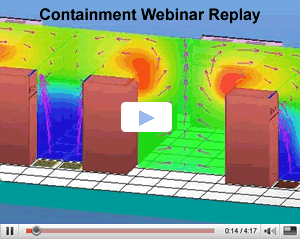 This design struggles because it lacks precision. The HVAC system addresses an entire room, meaning some areas receive excess cooling, while others don’t receive enough. As a result, the entire infrastructure-from the fans, to pumps, to air handlers-must work harder and consume more energy in the process.
Professionals facing such problems should first evaluate their cooling architecture and determine if the capacity exists to address existing and future compute loads. If this capacity exists, the goal is to harness it-to focus the cool air precisely where it’s needed. Because of the prevalence of hot aisle/cold aisle in existing data centers, one of the more practical air management strategies is cold aisle containment.
What is Cold Aisle Containment?
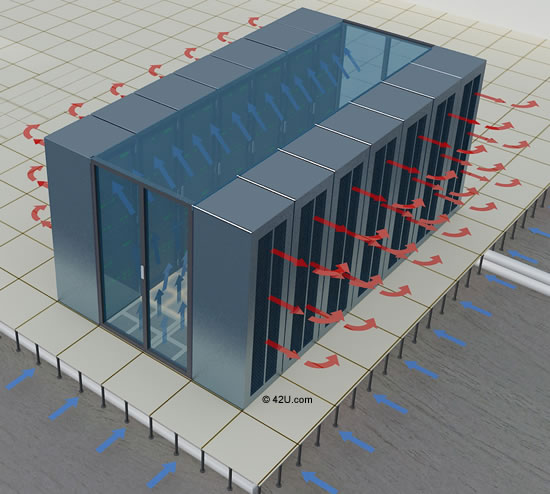
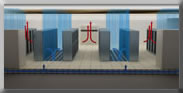
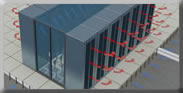
Cold Aisle Containment augments its predecessor’s (hot aisle/cold aisle) arrangement by enclosing the cold aisle. The aisle then becomes a room unto itself, sealed with barriers made of metal, plastic, or plexiglass.
As rack densities inevitably climb, the challenges above become more severe. The infrastructure struggles to deliver a sufficient volume of cool air to the equipment and to move exhaust air to the air handlers. As it’s forced to deliver colder air at a greater CFM, the cooling scheme consumes more energy from the fans through the pumps, down to the chiller. And even under minimal loads, the efficiency of these systems is suspect. The premise of cold aisle containment, though simple, can improve cooling performance.
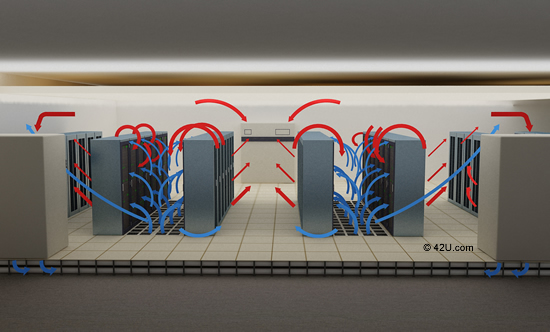
Hot Aisle/Cold Aisle Challenges:
Even at minor heat loads, there are challenges associated with hot aisle, cold aisle. Some of them include:
- Bypass air-“the volume of cold supply air that enters the room but does not directly enter the IT equipment”-limits the precise delivery of cold air at the server intake.
- Hot air recirculation, where exhaust heat enters the cold aisle, either over the tops of racks or through open rack spaces, ensures that the cooling infrastructure must throw colder air at the equipment to offset this mixing.
- Hot air contamination prohibits the air handlers from receiving the warmest possible exhaust air, rendering their operation less efficient.
- Hot spots may persist as a result of all of the above
The Evolution of Cold Aisle Containment
Cold Aisle Containment started as a makeshift design using the vinyl curtains common in clean rooms and freezers. These curtains, functioning as doors and roofs between the cold aisles, proved an inexpensive way to increase efficiency and a simple, flexible retrofit for most data center environments.
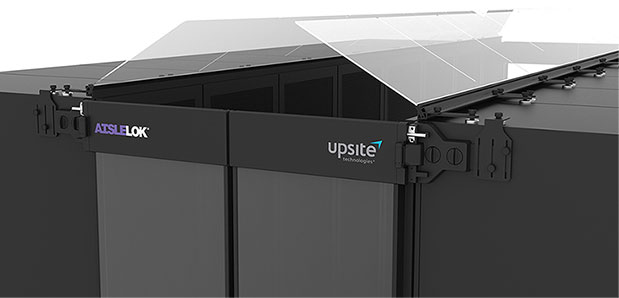
As more data centers embrace the concept, some rack manufacturers are bringing their own cold aisle containment systems to market. The barriers, instead of curtains, are fabricated from steel and use polycarbonate inserts to provide a viewing window into the cold aisle.
The same rack manufacturers, in new construction or renovation projects, may promote the use of containment with In-Row air conditioners. These units, more compact, are embedded within the row of server racks, immediately capturing server exhaust air, conditioning it, and distributing it to the cold aisle.
Enhanced, Efficient Airflow Management
Due to the open architecture of the data center room, hot aisle/cold aisle cannot attain complete air separation. With the cold aisle encased, the cold air, delivered from under the floor, stays where it’s needed at the server intake. The roof and walls of the containment ensure that the only place this air can exit is through the rackmount equipment. The exhaust air, because of the boundaries, routes back to the air handlers only, eliminating the previous concerns of hot air contamination and hot air recirculation.
Conclusion
On the data center floor, cold aisle containment provides targeted cooling. This precision has many operational advantages, as we’ve seen. Servers are assured a consistent inlet temperature; air conditioners can achieve greater capacities; the chiller plant can become more efficient by supplying and receiving elevated water temperatures. These improvements sound great on paper, yet they also produce tangible result: a reduction in capital and/or operational expenses. Consider the following examples:
- A presentation at 2008’s Data Center Energy Summit found that containment could reduce fan speed in the subject data center by 75%. Fan speed is directly proportional to fan energy consumption (Tschudi, 2008)
- A facility in the design stages, using cold aisle containment, may require less air conditioners, reducing the initial capital expenditure.
- An existing facility with thermal challenges may be able to maximize the entire cooling infrastructure through containment, instead of undertaking a long, costly renovation or construction project.
- Depending on the location, a facility may receive rebates or incentives from its utility for deploying cold aisle containment. If so, users may demonstrate a quick ROI to their management team.
The current economic climate may delay an organization’s ability to build a new data center. As a result, they will demand more uptime and more computing capacity from their existing facilities, while the industry encourages conservation and sustainability. Cold Aisle Containment proves an economical way to achieve both objectives.
Additional Aisle Containment Resources
References
EYP Mission Critical Facilities. (2006, July 26). Energy Intensive Buildings Trends and Solutions: Data Centers. Retrieved February 2, 2009, from Critical Facilities Round table: http://www.cfroundtable.org/energy/072106/myatt.pdf
Niemann, J. (2008). Hot Aisle vs. Cold Aisle Containment. Retrieved December 23, 2008, from APC Corporate Web Site:
http://www.apcmedia.com/salestools/DBOY-7EDLE8/DBOY-7EDLE8_R4_EN.pdf
Tschudi, W. (26, June 2008). SVLG Data Center Summit-LBNL Air Management Project. Berkeley, CA, United States of America.