



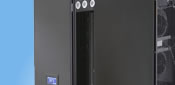
 Rittal LCP - High Density Cooling
Scalable, high-performance, high-density cooling for temperature-neutral expansion, retrofits and new server room /data center environments.
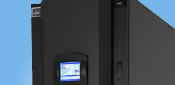 Liebert CRV - In-Row Precision Cooling
Self-contained precision cooling system that installs within a row of racks - close to the server heat source-for the most efficient cooling of critical IT equipment.
Supplemental Cooling Solutions for Server Racks, Computer Rooms & Data Centers
Hardware has changed dramatically over the last few years. New 1U servers or blades, while much more efficient in terms of computing, require more power and cooling than their predecessors. This fundamental change can overwhelm a data center that was not designed for this power footprint.
But there are alternatives to new construction. Supplemental/spot cooling solutions can add cooling capacity without rearranging cabinets, re-racking equipment, or impacting your operations. You can optimize your environment without breaking the bank or breaking ground.
What is Supplemental Cooling?
Rear Door Heat Exchangers
Blade chassis can produce Delta-Ts of 50 degrees, which may be beyond the capacity of existing CRAC coils. Rear Door Heat Exchangers condition the hot air and return it to the room at a more palatable temperature, aiding struggling CRACs.
Installed on racks, these units do not take up floor space-an important point in small size installations.
The rear door heat exchanger requires a chilled water source and a connection to a remote chiller system.
Overhead Heat Exchangers
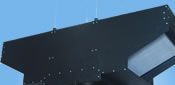
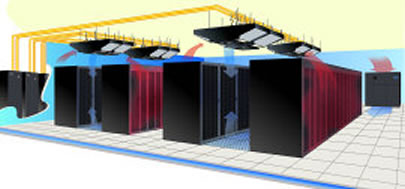
Overhead heat exchangers suspend above data center rows, complementing an existing hot aisle, cold aisle arrangement. The overhead module pulls in hot air as it rises from the hot aisle, conditions it, and returns it to the cold aisle. The existing CRAC units, while providing baseline cooling and humidity control, no longer have to work as hard.
The overhead units require a refrigerant pump and a remote heat rejection source: either a chiller or condenser, depending on the infrastructure available.
Server Room Air Conditioners
For smaller size/load installations, spot air conditioners can make a big difference. These units provide the airflow and temperature control absent from commercial comfort cooling. The ability to rack, stack, or hang the AC provides added flexibility.
Small air conditioners do not require remote heat rejection. But the integrated condenser will discharge hot air into the room.

What is the best supplemental cooling solution for your server room needs?

Our engineers can help you select the best cooling system for your IT project.
Click here or Call 1-800-638-2638 for a free initial project evaluation.


